
RISING TIDES AND ONLY A FEW BOATS

Updated: Jul 7
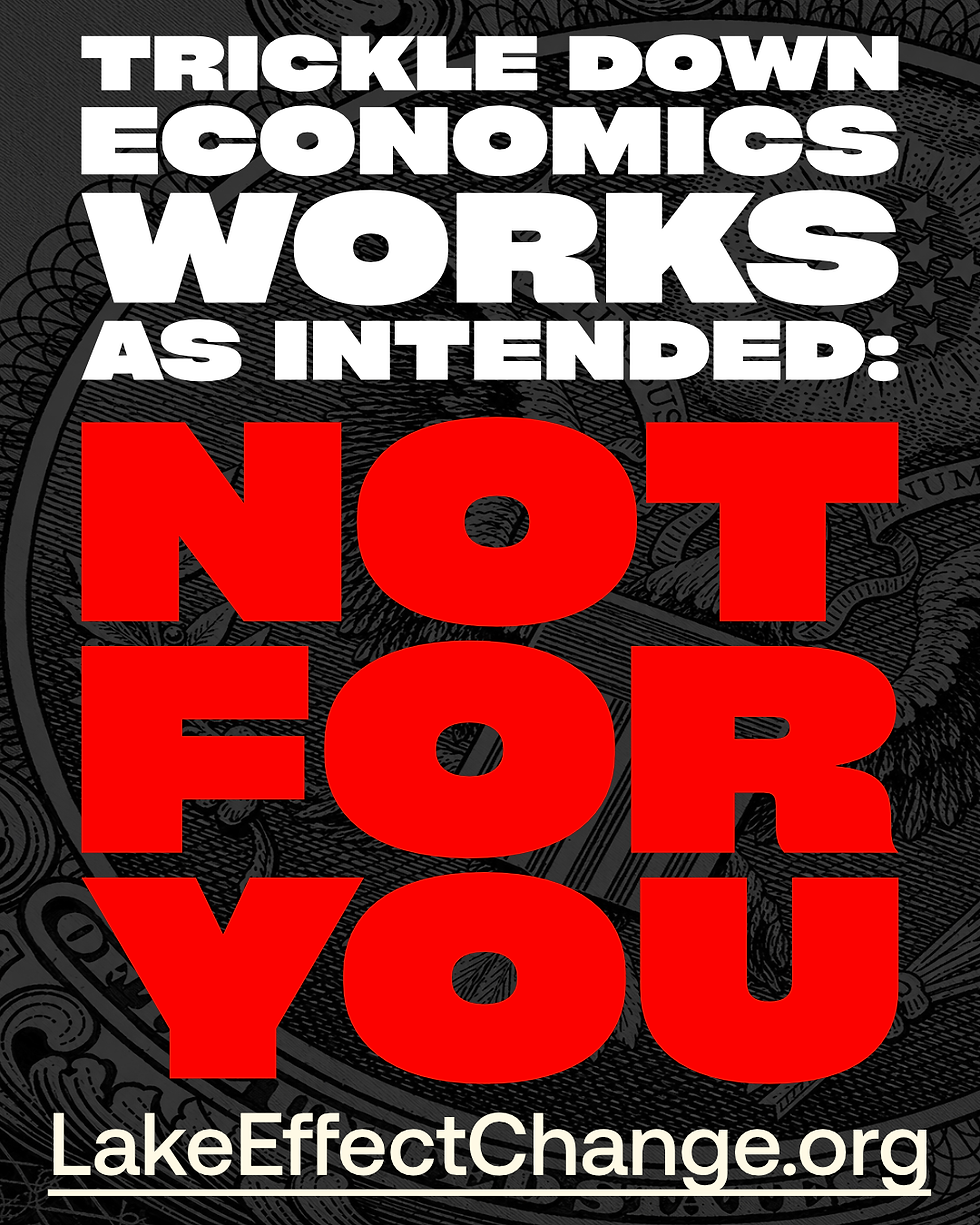
Back at the beginning of the Reagan Era, we were told that a rising tide lifts all boats, repeating a phrase used by John F. Kennedy in 1963. Cutting tax rates on the wealthy would spur investment, and the economy would grow enormously. Critics called it trickle-down economics; on occasion, even advocates of tax cuts would say this.

It did not happen.
Instead, the past forty years have provided evidence of just the opposite. Elon Musk's recent ascent to trillionaire status is just the culmination of this process of consolidating wealth among a very small number of business leaders.
Musk became a household name through his acquisition of Tesla, a company and a technology built by engineers Martin Eberhard and Marc Tarpenning, and his launch of SpaceX, which functions through the technological expertise of many engineers. Musk is not an engineering expert.
Then, in 2022, he acquired Twitter, another tech company built by someone else. He has used that social media platform to share his far-right political and anti-immigrant ideas.
He has used his wealth to become a powerful political influence as well: he created a superPAC which spent nearly $300 million to get Donald Trump back into office in 2024. This included some unorthodox and unethical practices, such as giving money to individual voters.

We need to look at the politics that made this possible...
The first big tax cut of Ronald Reagan’s presidency reduced the top marginal tax rate from 70% to 28%. While there have been some fluctuations since, it has remained relatively low. As important, the tax on investment income was also cut, and it remains below the rates for regular income. Arguments for lower rates on capital gains are that it will incentivize investment. But it has also incentivized shifting compensation to take advantage of the lower rate.
Only wealthy people can take advantage of this.
When Bill Gates gained wealth that dwarfed Wall Street fortunes, it represented a new model. Before corporation leaders deferred to the expertise of technical specialists; a chief executive would not contradict that expertise. In the 1950s and 60s, wealth was distributed broadly to shareholders and workers alike. Top executive pay was 30 times that of an average worker. But since Gates, the road to incredible riches was to grow a firm in an unexploited market, and structure the organization to funnel funds into the founders account. Executive pay is instead 300 times the median worker, and sometimes far, far more.
At the same time, wages have stagnated. Outsourcing to low wage countries outside the United States helped hollow out manufacturing in what we now call the "rust belt", Buffalo included. The courts and government policies have decimated labor unions.
Since labor unions have been the most effective advocates for wages and working conditions, the strongest voices in opposition to upwards redistribution have been weakened. Citizens United in 2010 opened the floodgates for unregulated independent expenditures. In 2024, 300 families accounted for 19% of all expenditures.
Until the 1980's, wage growth mirrored productivity growth. Then wages stagnated, even as productivity increased. The money that used to go to workers is now captured by a few people at the top of the income scale.

A RISING TIDE NO LONGER RAISES ALL BOATS - AND THAT BEGAN AROUND THE SAME TIME WE WERE TOLD THAT IT WOULD.
The trillion dollar compensation that Elon Musk has received with the initial public offering may well be a smoke and mirrors valuation. Paul Krugman suggests
“that SpaceX is essentially all about hype. It is, in effect, a $2.75 trillion meme stock. The only winners will be those who got in early, stoked a market frenzy, and exit before the bottom inevitably falls out.”
We will see. But it certainly is an indicator of a system where only a few win. To extend the metaphor, too many do not have a boat at all. The failure of the rising tide is from law and politics, not a supposed "free market".
Citations:
Thomas L. Hungerford, “The Economic Effects of Capital Gains Taxation,” Congressional Research Service, R40411 (June 18, 2010).
John Kenneth Galbraith, The New Industrial State, (Princeton University Press, 2007 [1967])
Citizens United v. FEC (558 U.S. 310 2010)


Comments